The 1,000 Subscriber Milestone
Getting your first 1,000 subscribers is one of the hardest things you'll do on YouTube. It's also one of the most important.
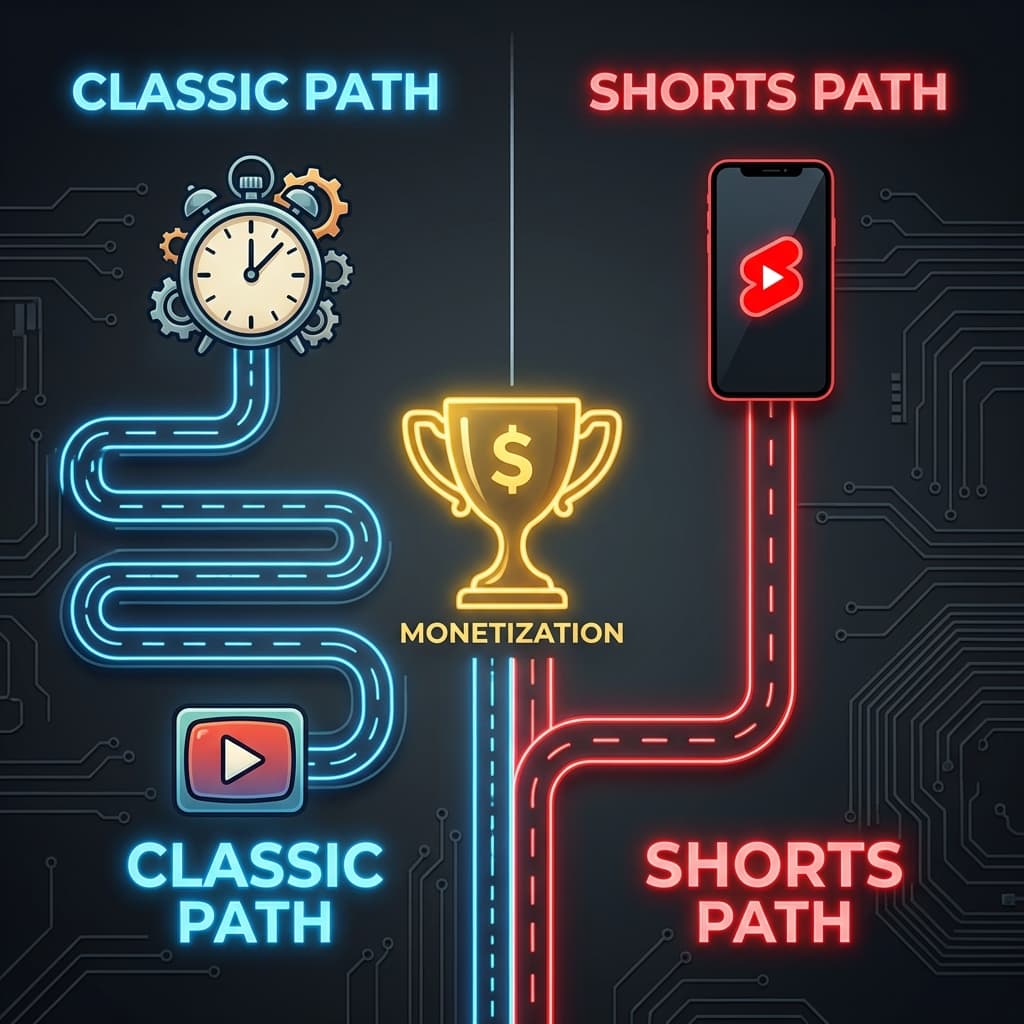
Why? Because 1,000 subscribers (plus 4,000 watch hours or 10 million Shorts views) unlocks the YouTube Partner Program - your path to earning money from your content.
But here's what most guides won't tell you: The strategy that gets you to 1,000 is different from the strategy that gets you to 100,000.
In this guide, you'll learn the "Outlier Strategy" - a data-driven approach that helps small creators punch above their weight.
Why Most Creators Never Hit 1,000
Let's start with the harsh reality:
- 88% of YouTube channels never reach 1,000 subscribers
- The average channel takes 15-22 months to hit the milestone
- Most creators quit within the first 90 days
Why do so many fail? Because they're using the wrong playbook.
The Big Creator Trap
New creators watch MrBeast and think: "I need to make videos just like him."
Bad idea. Here's why:
MrBeast has 200+ million subscribers. When he posts a video, it gets recommended to millions of people regardless of the topic. His success proves he's good at YouTube - it doesn't prove the topic itself is good.
Copying big creators is like copying a lottery winner's numbers after they've won. The circumstances that made it work don't apply to you.
The Algorithm Myth
"The algorithm hates small creators" - Wrong.
YouTube's algorithm doesn't hate you. It just doesn't know you yet. The algorithm promotes videos that keep viewers watching. If your video has a good click-through rate and watch time, it will get pushed - regardless of your subscriber count.
The real problem? Most small creators make videos on topics that were never going to work.
The Outlier Strategy Explained
Instead of copying big creators, the Outlier Strategy focuses on finding videos that:
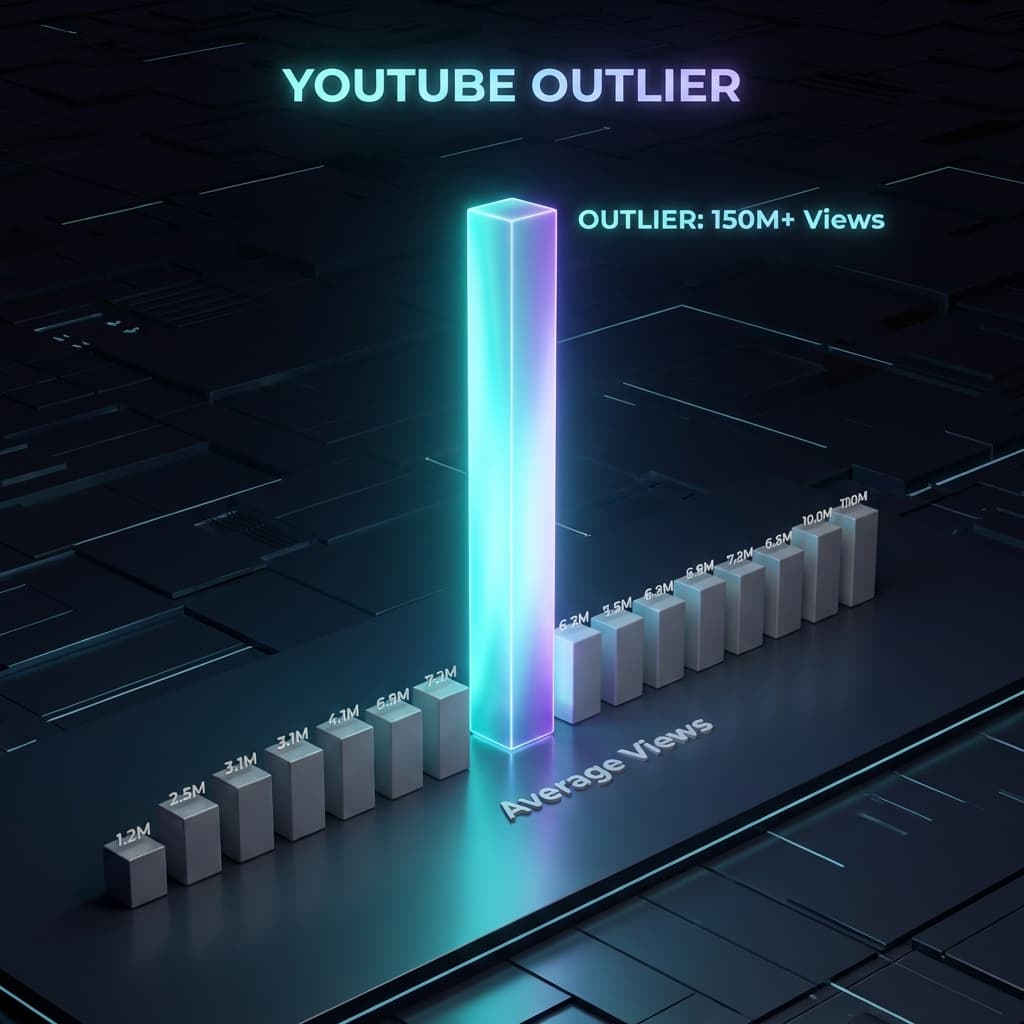
- Outperformed their channel's average by 5x or more
- Came from channels similar to yours (small to medium-sized)
- Were published recently (last 3-6 months)
These "outlier" videos prove that a topic can break through - even without a massive existing audience.
Why Outliers Matter
When you find a video that got 500,000 views on a channel that averages 10,000 views, something special happened. The topic, title, or hook resonated in a way that broke the pattern.
That's your signal. Not "this topic got views on a big channel" but "this topic proved itself on a channel like mine."
Step 1: Build Your Research List
Before you create anything, spend time building a list of channels to study.
Find 20-30 Channels in Your Niche
- Have 1,000 to 100,000 subscribers
- Post content similar to what you want to make
- Are actively uploading (posted within the last 30 days)
- Below 1K: Haven't proven they can grow yet
- Above 100K: Their growth factors don't apply to you
- 1K-100K: They've figured out something - and you can too
Diversify Your List
- 5-10 channels at your current size
- 10-15 channels slightly ahead of you
- 5 channels that are your 1-year goal
This gives you patterns at different growth stages.
Step 2: Hunt for Outliers
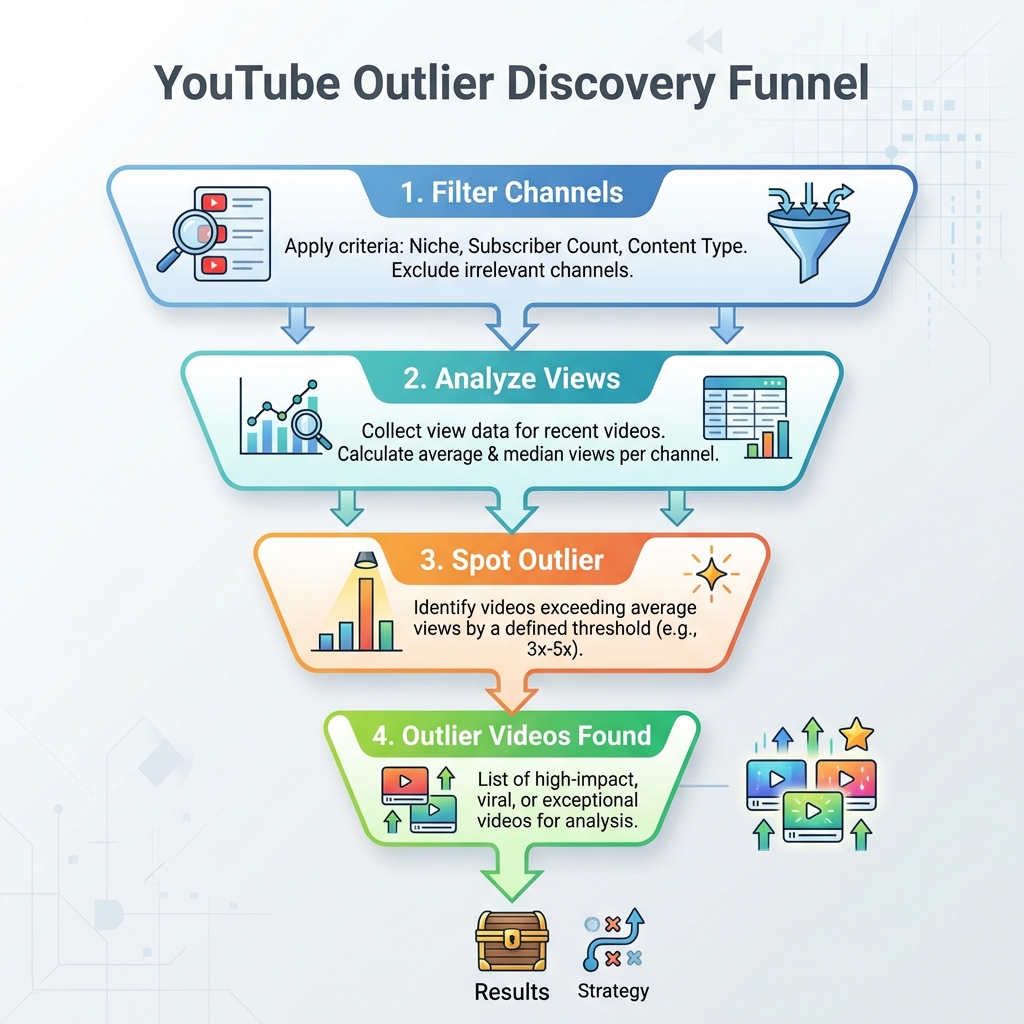
Now comes the key part. For each channel on your list:
Calculate Their Average Views
Look at their last 30 videos (excluding any obvious outliers). Calculate the average. This is their baseline.
Identify Outliers
- 5x or more: Strong outlier - worth analyzing
- 10x or more: Exceptional - study this intensely
- 50x or more: Mega outlier - could be your next video topic
Record Key Details
- The exact title
- The thumbnail style
- The topic angle
- Views Per Hour (VPH) if recent
- Publishing date
Step 3: Find the Patterns
After analyzing 20+ channels, patterns emerge. You'll start seeing:
Common Outlier Topics
Certain topics appear as outliers across multiple channels. These are your highest-confidence opportunities.
Title Formulas That Work
- "I Tried X for Y Days"
- "X vs Y: Which Is Better?"
- "The Truth About X"
- "Why X Is Wrong About Y"
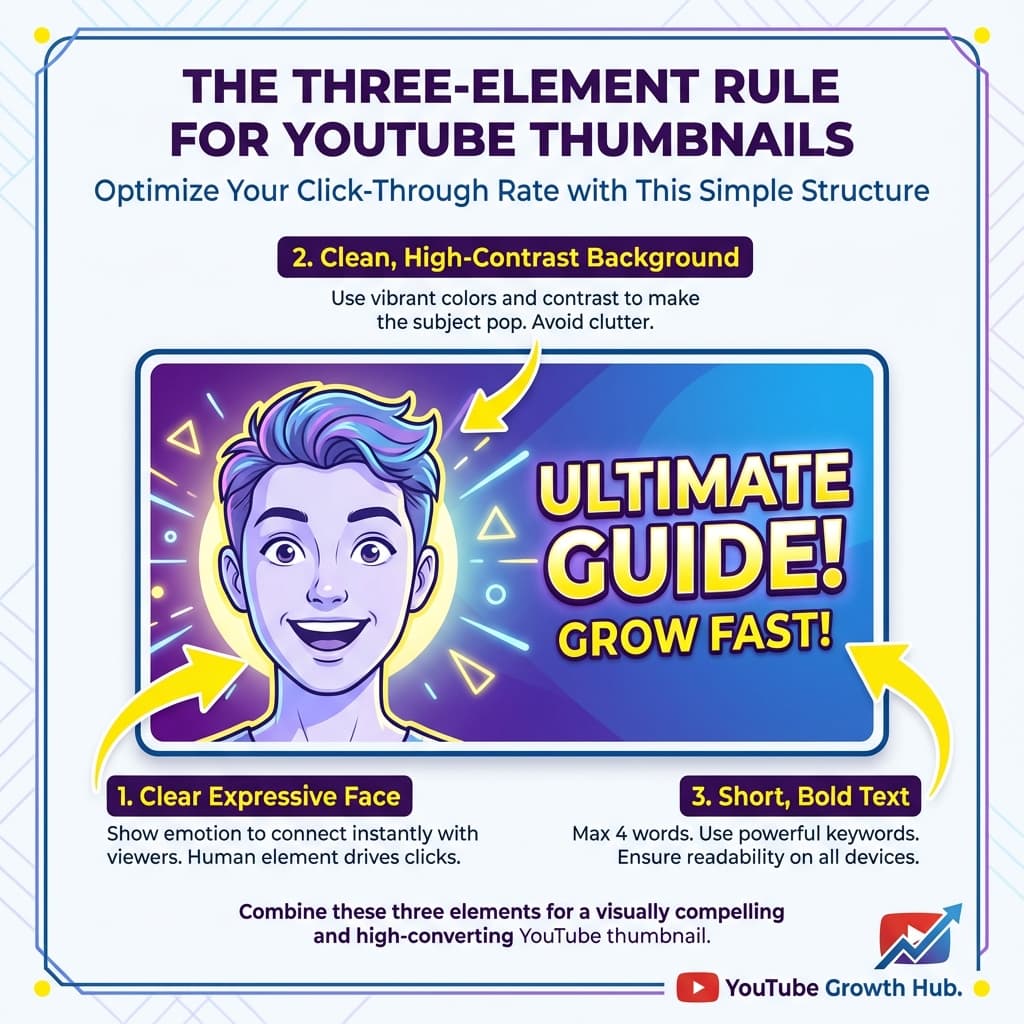
Thumbnail Elements
- Color schemes that stand out
- Facial expressions that convey emotion
- Text placement and font choices
- Visual contrast techniques
Step 4: The 70/30 Rule

Once you've found your patterns, apply the 70/30 Rule:
- 70% proven elements: Topic, format, hook style from successful outliers
- 30% your unique spin: Your perspective, expertise, personality
This isn't copying. This is smart market research applied to content creation.
Example Application
Outlier found: "I Tried Cold Showers for 30 Days" (10x outlier on a fitness channel)
- Personal challenge format
- 30-day timeframe
- Health/wellness topic
- First-person transformation
- Your specific results and metrics
- Unexpected findings
- Your honest opinion
- Your audience's context
Your video: "I Took Cold Showers for 30 Days as a Programmer - Here's What Changed"
Same proven format, fresh perspective for your audience.
Step 5: The First 48 Hours
The first 48 hours after publishing are critical for small creators. Here's how to maximize them:
Optimize Before Publishing
Title: Use your outlier-inspired formula. Make it curiosity-driven.
Thumbnail: Design 3 options. Pick the one that would make YOU click if you saw it in your feed.
Description: First 2-3 lines should include your main keyword. Add timestamps.
Tags: Use your main keyword + related terms. Don't keyword stuff.
Maximize Early Engagement
End screen: Point to your best-performing video Pinned comment: Ask a question to drive comments Community post: Announce the video to subscribers
Track VPH
Views Per Hour (VPH) tells you if YouTube is pushing your video.
VPH = Total Views / Hours Since Published- First 24 hours: 20-50 VPH is good
- Hours 24-48: 10-30 VPH is good
- If VPH spikes, YouTube is testing your video more broadly
Step 6: The Content Calendar
Consistency matters, but smart consistency matters more.
The Sustainable Schedule
- 2 videos per week is ideal
- 1 video per week is the minimum
- 3+ videos per week only if quality doesn't suffer
The Content Mix
- 70%: Outlier-inspired content (your highest-confidence topics)
- 20%: Experiments (test new formats or topics)
- 10%: Passion projects (keeps you motivated)
The Feedback Loop
- Did it outperform or underperform your average?
- What worked? What didn't?
- How can you apply this to the next video?
Step 7: The Compound Effect
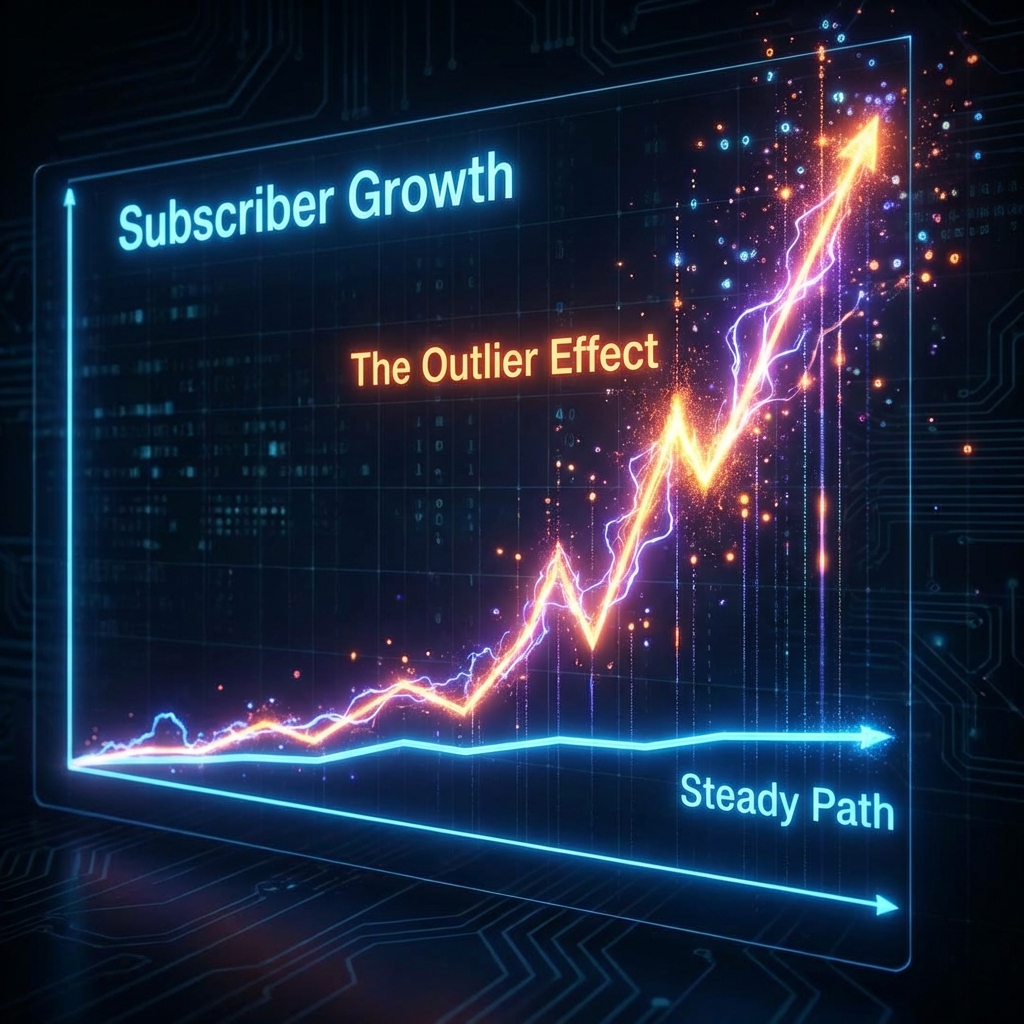
Here's what happens when you apply the Outlier Strategy consistently:
Month 1-2: You learn what works in your niche. Your videos start performing slightly better.
Month 3-4: You've found 2-3 reliable topic patterns. Your average views increase.
Month 5-6: One video breaks out (5x+ your average). Subscribers surge.
Month 7-9: You refine based on data. Growth accelerates.
Month 10-12: You cross 1,000 subscribers. Monetization unlocked.
This isn't guaranteed - but it's the pattern we see repeatedly from creators who use data-driven research.
Common Mistakes to Avoid
Mistake 1: Topic Randomness
Don't post whatever you feel like. Each video should be strategic - either pursuing an outlier opportunity or testing a specific hypothesis.
Mistake 2: Copying Exactly
Taking a successful video and making it word-for-word is lazy and audiences notice. Use the 70/30 rule.
Mistake 3: Ignoring Data
If a topic consistently underperforms, stop making it. Let the data guide you.
Mistake 4: Giving Up Too Early
Most creators quit before their first outlier. Commit to at least 30 videos before evaluating whether to continue.
Mistake 5: Neglecting Fundamentals
- Bad audio quality
- Boring delivery
- Poor editing
- Clickbait that doesn't deliver
Get the basics right, then let research multiply your results.
Tools That Help
Manual Research (Free)
- Create a spreadsheet
- List channels to study
- Calculate averages and identify outliers
- Track patterns over time
Time investment: 5-10 hours per week
OutSpotYT (Affordable)
- Search any keyword or channel
- See outlier scores calculated automatically
- Use AI to analyze patterns
- Video Analyzer for deep content analysis
Time investment: 1-2 hours per week
At $9.99/month, it's designed for growing creators who need results without enterprise pricing.
Your 90-Day Action Plan
Days 1-7: Research Phase - Build your channel research list (20-30 channels) - Analyze the first 10 channels for outliers - Identify 5 potential video topics
Days 8-14: Content Creation - Create your first outlier-inspired video - Apply the 70/30 rule - Focus on quality over quantity
Days 15-30: Establish Rhythm - Publish 1-2 videos per week - Track performance (views, CTR, watch time) - Continue outlier research
Days 31-60: Refine - Double down on what works - Cut what doesn't - Find 3 reliable topic patterns
Days 61-90: Accelerate - Increase output if quality permits - Pursue your highest-confidence outlier opportunities - Build momentum toward 1,000
The Mindset Shift
The creators who reach 1,000 subscribers share a common trait: They treat YouTube like a skill to be learned, not a lottery to be won.
Data-driven research isn't cheating. It's smart. The best creators in every field study what works before creating.
Your job isn't to guess what viewers want. Your job is to find proof of what works and deliver it better.
Keep Growing: Related Guides
Once you're on the path to 1K, these resources will help you move faster:
- Monetization roadmap: Once you hit 1K subs, you'll need watch hours. Read our complete YouTube monetization guide for 2026 to plan ahead.
- Stuck under 100 views? If your videos aren't getting traction yet, check out why YouTube videos get under 100 views and how to fix it.
- Master outlier detection: Learn the full framework in our guide to YouTube outlier videos.
Conclusion: Your First 1,000
Reaching 1,000 subscribers isn't about luck. It's about:
- Finding what works (outlier research)
- Applying it smartly (70/30 rule)
- Staying consistent (2 videos/week)
- Iterating based on data (feedback loop)
The creators who succeed aren't necessarily more talented. They're more strategic.
Your first 1,000 subscribers are waiting. Go find your outliers.
Ready to find your first viral video? Start with OutSpotYT - outlier detection designed for growing creators.