The Hidden Pattern Behind Viral Videos
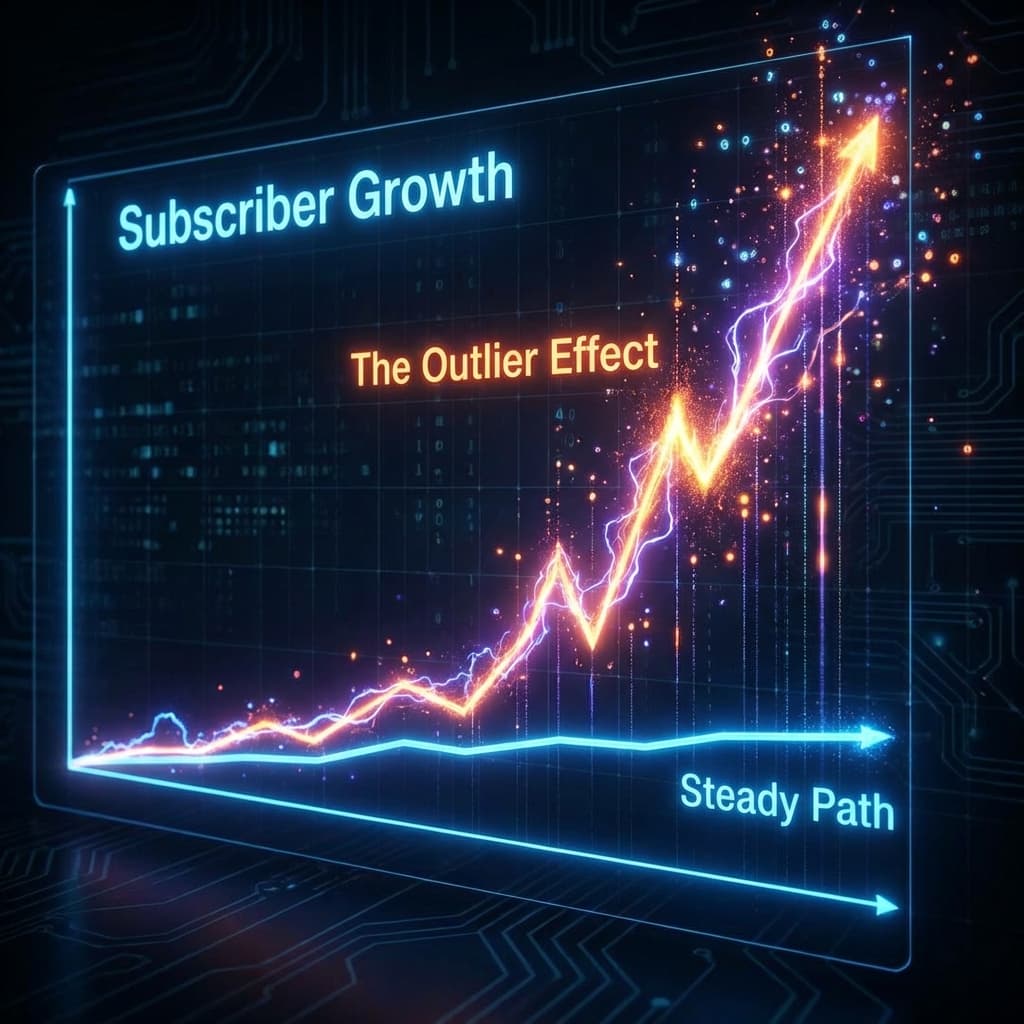
Have you ever wondered why some videos explode with millions of views while others from the same creator barely get noticed? The answer lies in understanding outlier videos - and once you learn to spot them, you'll never look at YouTube the same way again.
- What exactly makes a video an "outlier"
- The simple math behind outlier detection
- Why traditional research methods fail most creators
- A step-by-step process to find and analyze outliers
- How to ethically replicate outlier success for your own channel
Let's dive in.
What Is a YouTube Outlier Video?
An outlier video is a video that performs significantly better than a channel's typical content. It's not just a good video - it's a video that breaks the pattern.
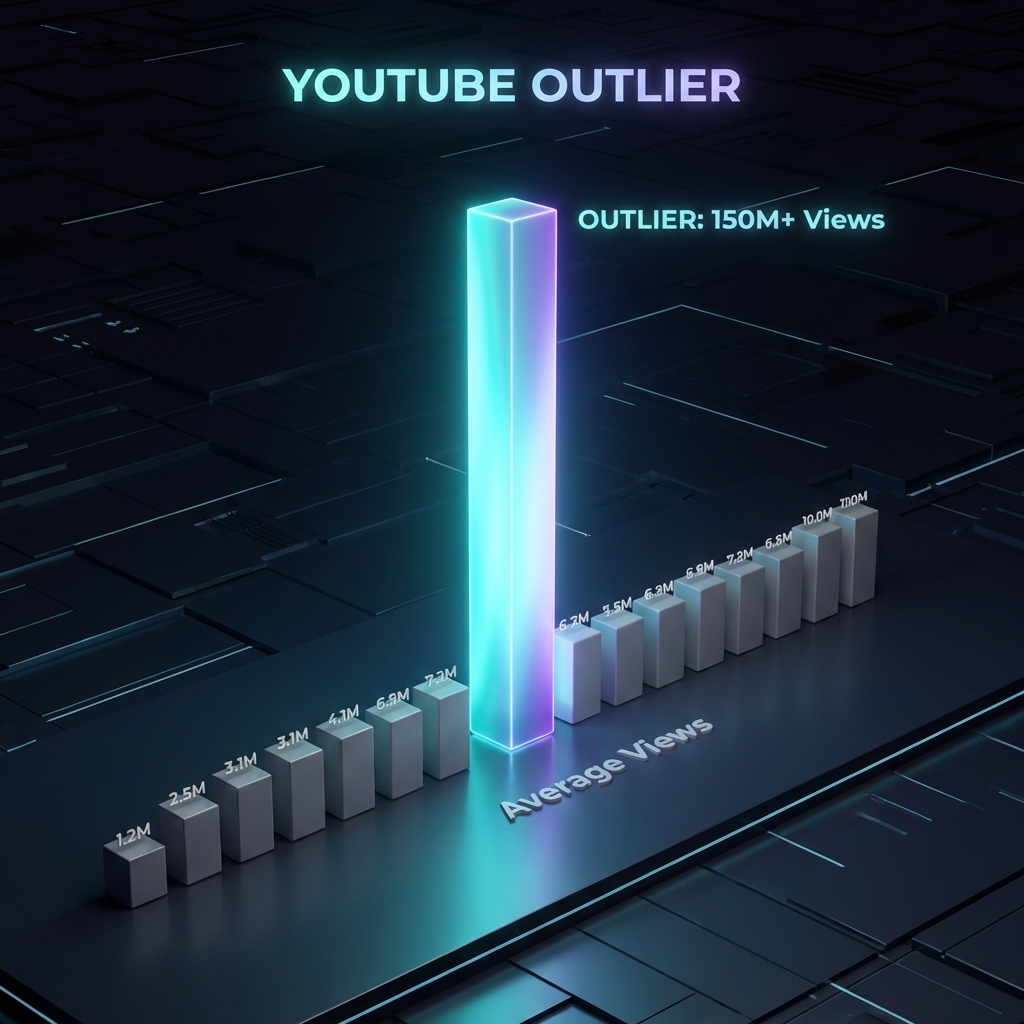
Think about it this way: If a creator averages 10,000 views per video, and suddenly one video gets 500,000 views, that's an outlier. Something about that specific video resonated with the algorithm and the audience in a way that their normal content doesn't.
The Math Behind Outliers
The outlier score is surprisingly simple:
Outlier Score = Video Views ÷ Channel Average Views- Video views: 500,000
- Channel average: 10,000
- Outlier score: 50x
A video with a 50x outlier score means it performed 50 times better than the channel's average. This isn't luck - it's a signal that the video hit on something powerful.
What Counts as a Significant Outlier?
Based on our analysis of millions of videos:
| Outlier Score | Classification | Significance |
|---|---|---|
| 1-2x | Normal | Expected performance |
| 2-5x | Above Average | Something worked well |
| 5-10x | Strong Outlier | Worth analyzing deeply |
| 10-50x | Exceptional | Viral potential identified |
| 50x+ | Mega Outlier | Study this intensely |
Why Traditional Research Methods Fail
- Looking at trending videos
- Checking what big creators are doing
- Following their gut feeling
Here's the problem: trending videos and mega-creators operate in a completely different context than you do.
When MrBeast uploads a video, it gets millions of views regardless of the topic. That tells you nothing about whether the topic itself is good - it just tells you MrBeast has a massive audience.
Outlier analysis is different. When you find a video that performed 20x better than a channel's average, you know the topic, thumbnail, or hook did something special. It proved itself against that creator's baseline.
The Survivorship Bias Problem
If you only study successful creators, you miss the full picture. Outlier analysis lets you study success relative to a creator's normal performance - which is far more actionable for growing channels.
How to Calculate Outlier Score (Step-by-Step)
Method 1: Manual Calculation
- Find the channel's average views
- Identify high-performing videos
- Calculate the outlier score
Method 2: Views Per Hour (VPH) Analysis
For newer videos, views alone don't tell the full story. A video published yesterday with 50,000 views is more impressive than one published a year ago with the same amount.
VPH = Total Views ÷ Hours Since PublishedHigh VPH indicates strong early momentum - a key signal that a topic is resonating right now.
What Makes Videos Become Outliers? (5 Key Elements)
After analyzing thousands of outlier videos, we've identified five patterns that consistently appear:
1. Curiosity Gaps in Titles
Outlier titles create an itch that viewers need to scratch. They promise valuable information without giving everything away.
Weak title: "My New Morning Routine" Outlier title: "I Tried a 4 AM Morning Routine for 30 Days - Here's What Happened"
The second title makes you wonder: What happened? Did it work? What changed?
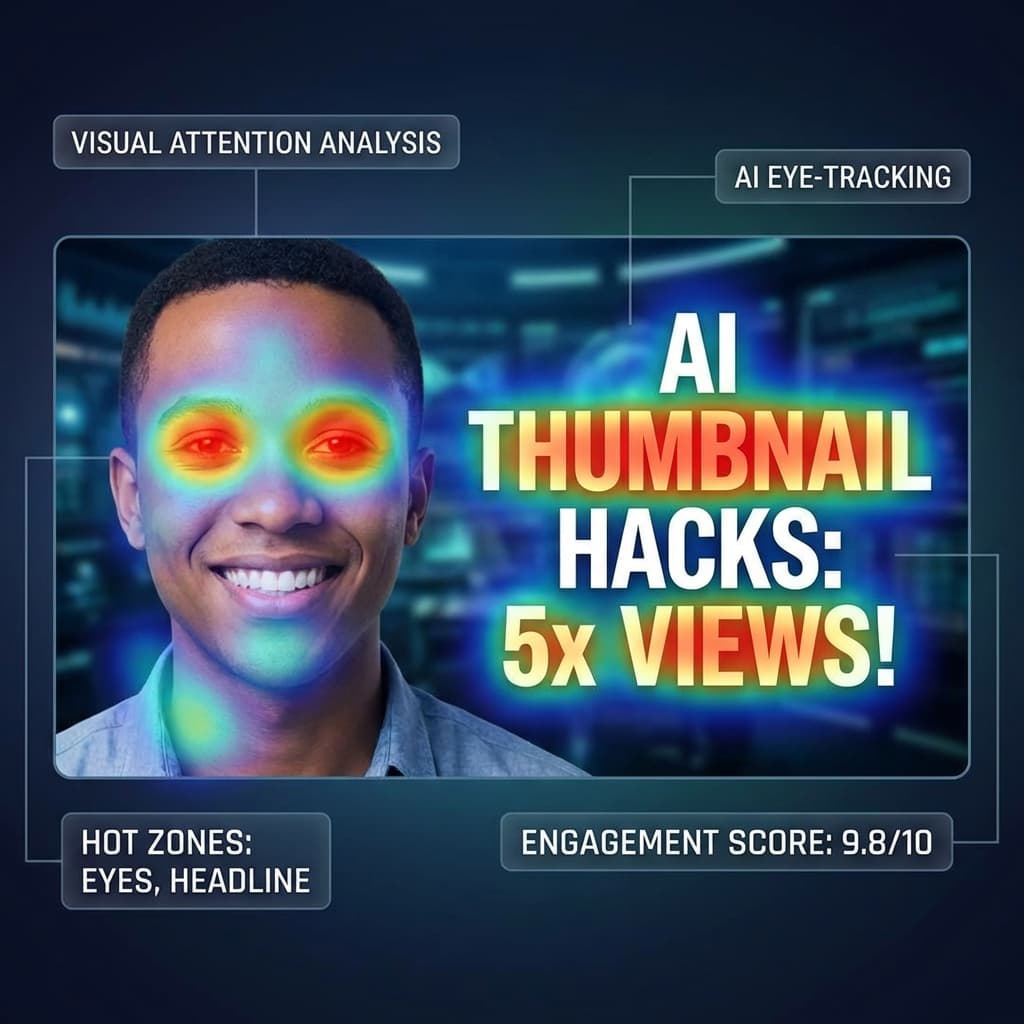
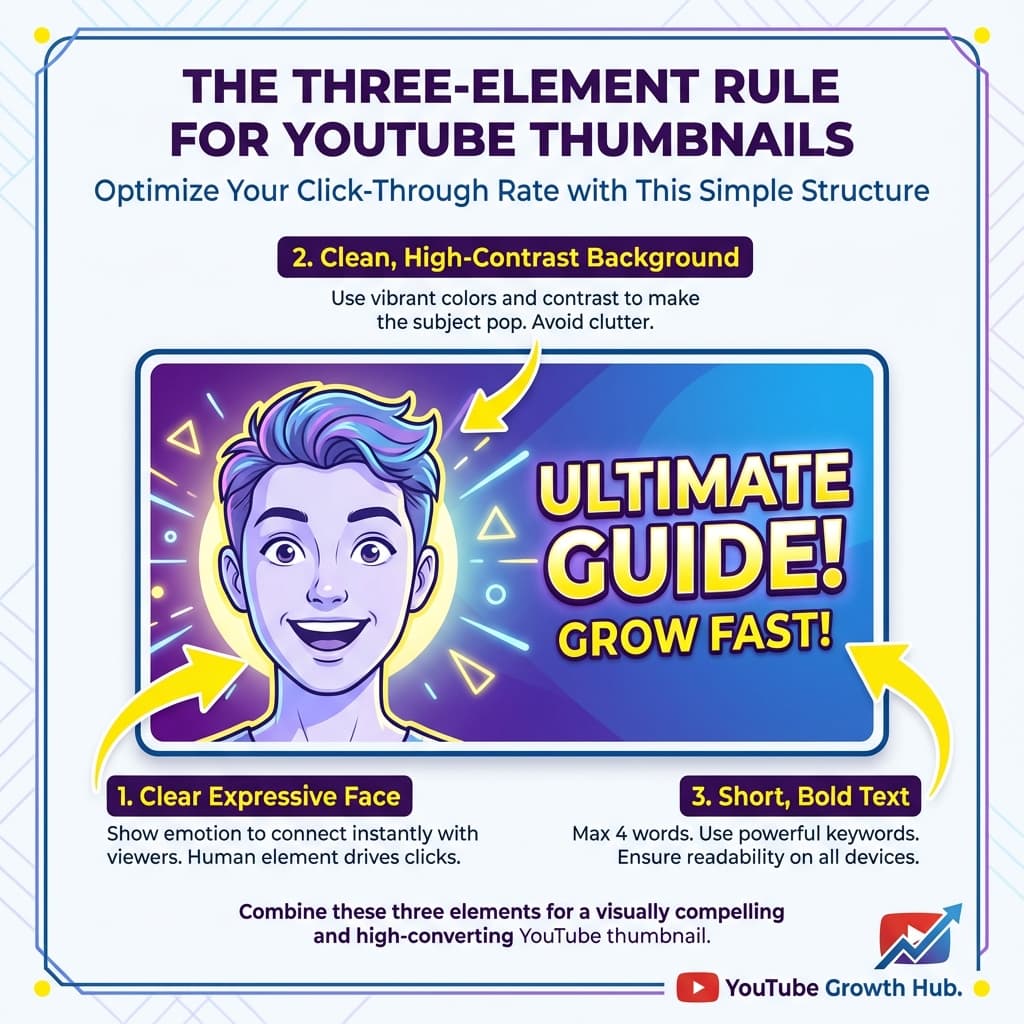
2. Pattern Interrupts in Thumbnails
- Use unexpected colors (bright yellow on a sea of blue)
- Show genuine emotion (not posed)
- Create visual contrast
- Include one clear focal point
3. Proven Topic + Fresh Angle
Most outliers aren't completely new topics - they're proven topics with a fresh spin:
- Proven: "How to edit videos"
- Outlier angle: "I edited videos for 100 days using only my phone"
4. Strong First 30 Seconds
- Start with the most exciting part
- Promise a transformation or revelation
- Create immediate curiosity
- Skip lengthy intros
5. Trend Alignment
- A new tool or product
- A cultural moment
- A seasonal trend
- A controversy in the niche
Step-by-Step Process to Find Outliers
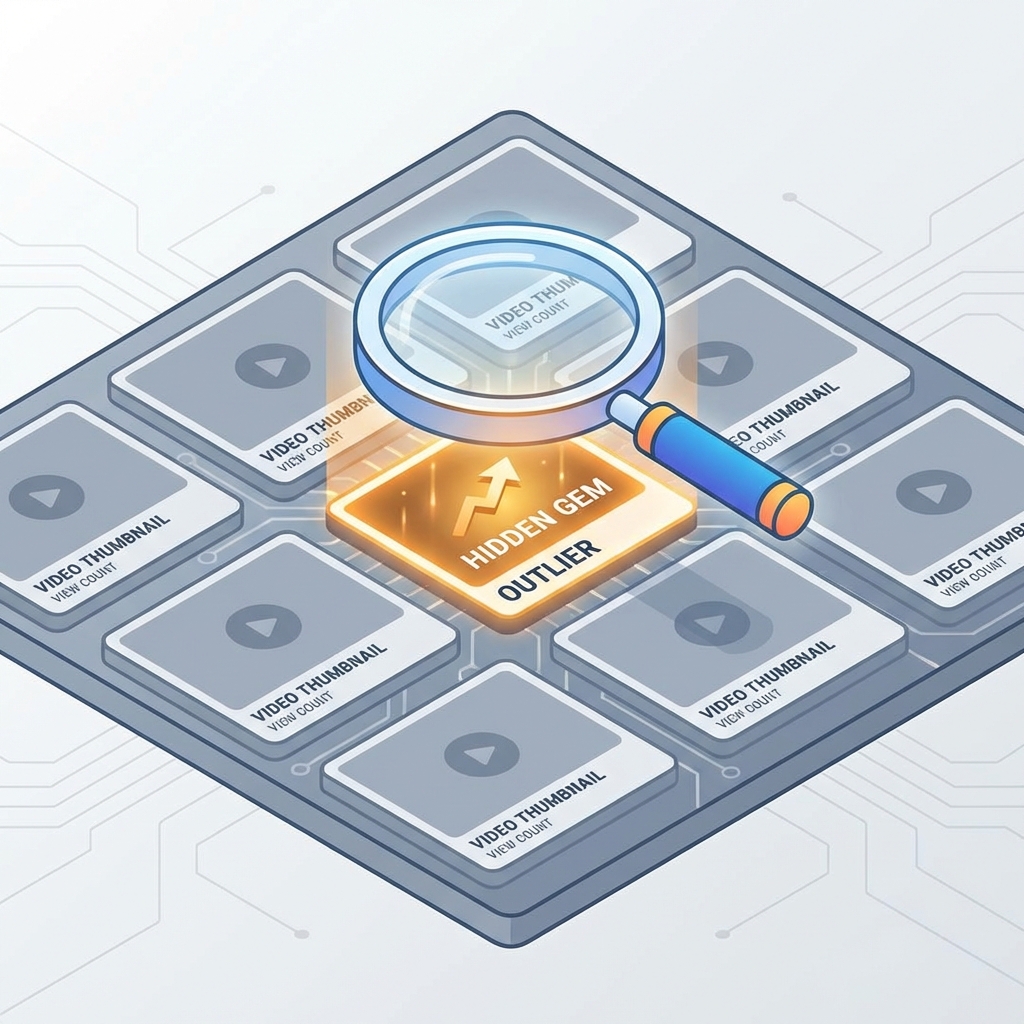
Here's a practical workflow you can use today:
Step 1: Build Your Research List
- 5-10 smaller channels (similar to your size)
- 10-15 mid-sized channels (your goal size)
- 5 larger channels (for trend spotting)
Step 2: Analyze Each Channel
- Calculate their average view count
- Identify videos that are 5x+ above average
- Note the video topic, title style, and thumbnail approach
Step 3: Look for Patterns
- Are certain topics appearing as outliers across multiple channels?
- Are specific title formulas working repeatedly?
- Are certain thumbnail styles outperforming?
Step 4: Validate with VPH
Focus on recent outliers (last 3-6 months) and check their VPH. High VPH outliers are especially valuable because they indicate current audience interest.
Step 5: Create Your Idea Bank
- Topic angle
- Why it worked (your hypothesis)
- How you could adapt it for your audience
Case Study: Real Outlier Analysis
Let's walk through a real example (with hypothetical numbers for illustration).
Channel: A tech reviewer with 50K subscribers Average views: 15,000 per video
- Title: "I Switched to Linux for a Week - A Windows User's Honest Review"
- Views: 450,000
- Outlier Score: 30x
- VPH at 48 hours: 9,375
- Personal challenge hook - "I did X for Y time" is proven
- Built-in conflict - Windows user trying Linux creates narrative tension
- Honest review promise - Suggests they won't hold back
- Accessible topic - Linux curiosity exists beyond tech enthusiasts
- Personal challenge format works in this niche
- "Honest review" phrasing builds trust
- Cross-platform comparisons create curiosity
- Week-long timeframe is digestible but substantial
Common Outlier Patterns to Look For
Pattern 1: The Challenge/Experiment Format
"I Tried X for Y Days" "I Only Used X for a Month" "I Ate Like X for a Week"
Pattern 2: The Versus/Comparison
"X vs Y - Which Is Actually Better?" "I Tested X Against Y" "The Truth About X Compared to Y"
Pattern 3: The Big Number
"I Made $X in Y Days" "X Things Nobody Tells You About Y" "I Spent $X on Y - Was It Worth It?"
Pattern 4: The Secret/Hidden Knowledge
"What X Doesn't Want You to Know" "The Truth About X" "Why X Is a Scam (Or Not)"
Pattern 5: The Transformation
"I Fixed X in Y Days" "From X to Y: My Journey" "How I Went From X to Y"
How to Ethically Replicate Outlier Success
Finding outliers is just the beginning. Here's how to use them ethically:
DO:
- Take inspiration from topics and formats - If challenge videos work, create your own unique challenge
- Learn from title structures - Adapt the formula with your own topic
- Study thumbnail composition - Apply similar design principles to your own images
- Analyze the content structure - Note pacing, hooks, and story beats
DON'T:
- Copy titles word-for-word - That's lazy and audiences notice
- Steal thumbnails or ideas wholesale - Create your own spin
- Ignore your unique perspective - Your angle is what makes it fresh
- Force topics that don't fit your channel - Relevance matters
The 70/30 Rule

- 70% proven elements (topic, format, hook style)
- 30% your unique spin (your perspective, audience, expertise)
Tools That Make Outlier Detection Easier
Manual outlier analysis works, but it's time-consuming. Here's where tools can help:
- Automatic outlier score calculation
- VPH (Views Per Hour) metrics
- Search filtering by outlier score
- AI-powered pattern analysis
- Affordable pricing for small creators
OutSpotYT was built specifically for this purpose - helping small creators find outliers without spending hours on manual research or hundreds of dollars on enterprise tools.
Your 4-Week Action Plan
Here's how to put this knowledge into practice:
Week 1: Research Foundation
- Build your channel research list (20-30 channels)
- Analyze 10 channels for outliers
- Document your initial findings
Week 2: Pattern Recognition
- Continue analysis (remaining channels)
- Identify 3-5 common patterns
- Create your idea bank with 10+ potential topics
Week 3: Content Creation
- Choose your top outlier-inspired idea
- Apply the 70/30 rule (proven format + your spin)
- Create and publish your first outlier-inspired video
Week 4: Analyze and Iterate
- Review your video's performance
- Compare to your average
- Refine your approach based on results
Keep Learning: Next Steps
Now that you understand outlier detection, here's where to go next:
- Ready to hit 1K subs? Read our complete guide to getting your first 1,000 YouTube subscribers for a data-driven 90-day action plan.
- Thumbnails matter: Your outlier-inspired video needs a click-worthy thumbnail. Check out our YouTube thumbnail design guide for the 7 rules of high-CTR thumbnails.
- Stuck under 100 views? If your videos aren't getting traction yet, our guide on why YouTube videos get under 100 views has 7 specific fixes.
Conclusion: Your Competitive Edge
Most creators guess at what will work. They follow trends blindly, copy big creators directly, or just hope their next video catches on.
You now have a framework that actually works:
- Find outliers - Videos that proved themselves against a creator's baseline
- Analyze patterns - Understand why they worked
- Apply the 70/30 rule - Proven elements + your unique spin
- Iterate based on data - Let results guide your strategy
The creators who win on YouTube aren't necessarily the most talented - they're the ones who understand what works and systematically apply that knowledge.
Outlier detection is your unfair advantage. Use it.
Ready to find outliers faster? OutSpotYT automates this entire process, helping you discover viral video ideas in minutes instead of hours. Start your free trial today.