The YouTube Algorithm Is Not Your Enemy
Let's start by killing the biggest myth in the YouTube creator space: "The algorithm hates small channels."
Wrong. The algorithm does not hate anyone. It does not even know who you are. It is a matching system - it matches videos to viewers based on what is most likely to keep them watching.
Understanding how this system actually works is the difference between fighting against YouTube and having YouTube work for you. In this guide, you will learn exactly how the algorithm operates in 2026 and how to align your content for maximum reach.
5 Algorithm Myths Debunked
Before we get into how it works, let's clear out the nonsense:
Myth 1: "The Algorithm Punishes Small Channels"
Reality: YouTube has publicly stated that channel size is not a ranking factor. Video performance is what matters. A 500-subscriber channel with a video that has 8% CTR and 60% retention will get recommended over a 500K-subscriber channel with a video that has 2% CTR and 30% retention.
YouTube has been actively experimenting with recommending content from smaller channels to diversify their ecosystem.
Myth 2: "You Must Post Every Day"
Reality: Posting frequency matters less than posting quality. A channel that posts one excellent video per week will outperform a channel posting daily mediocre content. The algorithm evaluates each video individually.
Myth 3: "Tags Are Critical for Discovery"
Reality: Tags have minimal impact in 2026. YouTube's AI understands your video content through the title, description, transcript (auto-generated), and the actual video content. Focus on clear titles and descriptions, not keyword-stuffed tags.
Myth 4: "Subscribers See All Your Videos"
Reality: Only a fraction of your subscribers see each video in their feed. YouTube tests each video with a sample of your audience first. If that sample responds well (high CTR and retention), the video gets pushed to more subscribers and then to non-subscribers.
Myth 5: "The Algorithm Changes Randomly"
Reality: While YouTube does update its systems, the fundamental signals have not changed in years. CTR, watch time, and satisfaction have been the core signals since 2016. What changes is how precisely YouTube measures these signals, not the signals themselves.
The 4 Ranking Signals That Actually Matter
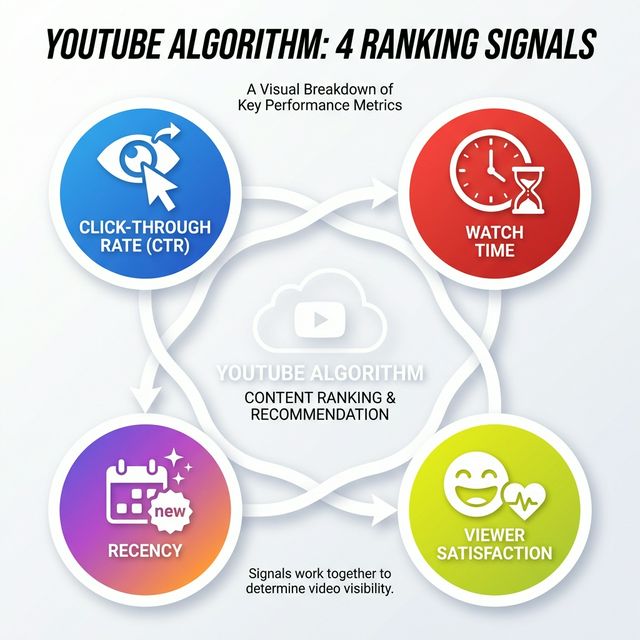
Signal 1: Click-Through Rate (CTR)
What it is: The percentage of people who click your video when they see it.
Why it matters: CTR is the algorithm's first filter. If people do not click, nothing else matters. YouTube shows your video to a small test audience first. If CTR is strong, it expands to a larger audience.
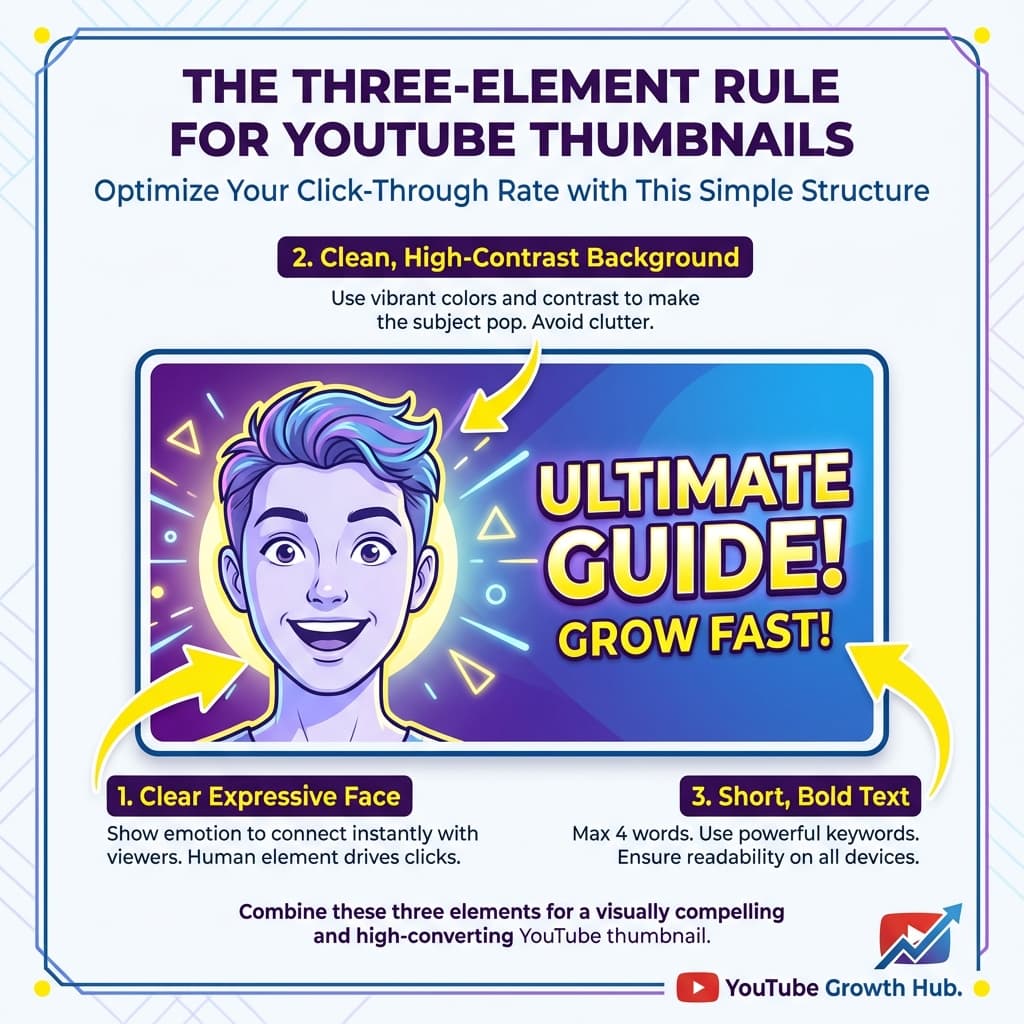
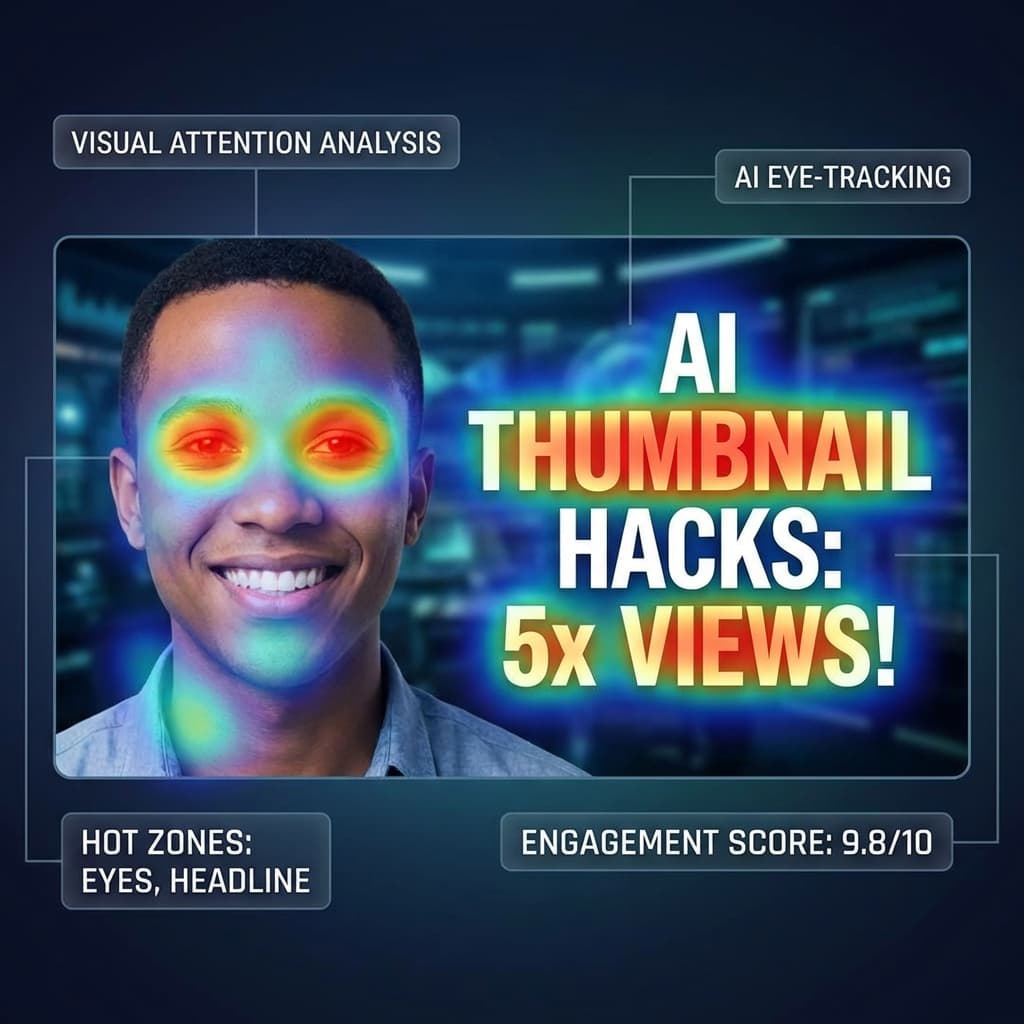
- Thumbnails with high contrast, clear focal points, and genuine emotions
- Titles that create curiosity gaps without being misleading
- Thumbnail-title combinations that complement each other
Benchmark: Average CTR is 2-10%. Aim for 4-6% minimum. On a small channel, 8-12% is achievable because your audience is more targeted.
For a deep dive on thumbnails, read our complete thumbnail design guide.
Signal 2: Watch Time and Retention
What it is: How long viewers watch your video and what percentage they complete.
Why it matters: YouTube's primary goal is keeping viewers on the platform. Videos that keep people watching get recommended more because they serve YouTube's business model.
- Average View Duration (AVD): How many minutes the average viewer watches
- Average Percentage Viewed: What fraction of the video viewers complete
- Retention curve shape: Ideal is a gradual decline, not a steep cliff
- Hook viewers in the first 15 seconds with your most compelling point
- Use pattern interrupts every 30-60 seconds (new angles, graphics, pacing changes)
- Eliminate filler and get to the value fast
- Structure content with open loops that keep viewers watching for the payoff
Signal 3: Viewer Satisfaction
What it is: How satisfied viewers are after watching. Measured through likes, shares, "not interested" clicks, and post-watch surveys YouTube occasionally shows.
Why it matters: YouTube does not just want views - it wants viewers to ENJOY what they watch. High satisfaction means viewers come back to YouTube, which serves the platform's long-term goals.
- Deliver on your title and thumbnail promise (never bait-and-switch)
- Provide genuine value - teach something, entertain, or solve a problem
- End on a high note (strong conclusions, not "thanks for watching, bye")
- Ask for engagement naturally, not desperately
Signal 4: Recency
What it is: How recently the video was published.
Why it matters: YouTube gives new videos an initial boost to test their performance. Fresh content gets a window of opportunity where YouTube actively shows it to test audiences.
- Maintain a consistent upload schedule so YouTube knows when to expect new content
- Publish when your audience is most active (check YouTube Studio analytics)
- For evergreen topics, use "2026" or current year in titles to signal freshness
- Update older high-performing videos with new thumbnails or end screens to reactivate them
How the Algorithm Treats Small vs. Large Channels
This is the section every small creator needs to read.
The Testing Phase
Every video, regardless of channel size, goes through a testing phase:
- Initial push: YouTube shows your video to a small sample of your subscribers and browse viewers
- Performance evaluation: YouTube measures CTR and early retention
- Expand or contract: Strong performance means shown to more people. Weak performance means stops promoting
Small Channel Advantages
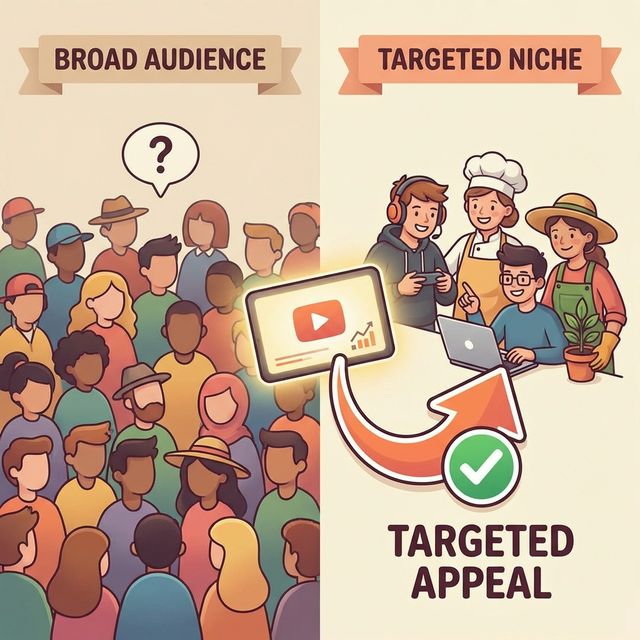
- Higher CTR is easier: Your audience is more targeted, so thumbnails resonate better
- More niche authority: YouTube knows exactly what your channel is about
- Algorithm testing: YouTube has been actively testing recommending smaller channel content
Small Channel Challenges
- Smaller test audience: Fewer subscribers means fewer initial test viewers
- Less data: YouTube has less history to understand your content patterns
- No brand recognition: Viewers do not recognize your face or channel name yet
The Equalizer
The great equalizer is video performance. If your video outperforms in the testing phase, YouTube does not care that you have 500 subscribers. It will push your video to thousands or millions of non-subscribers.
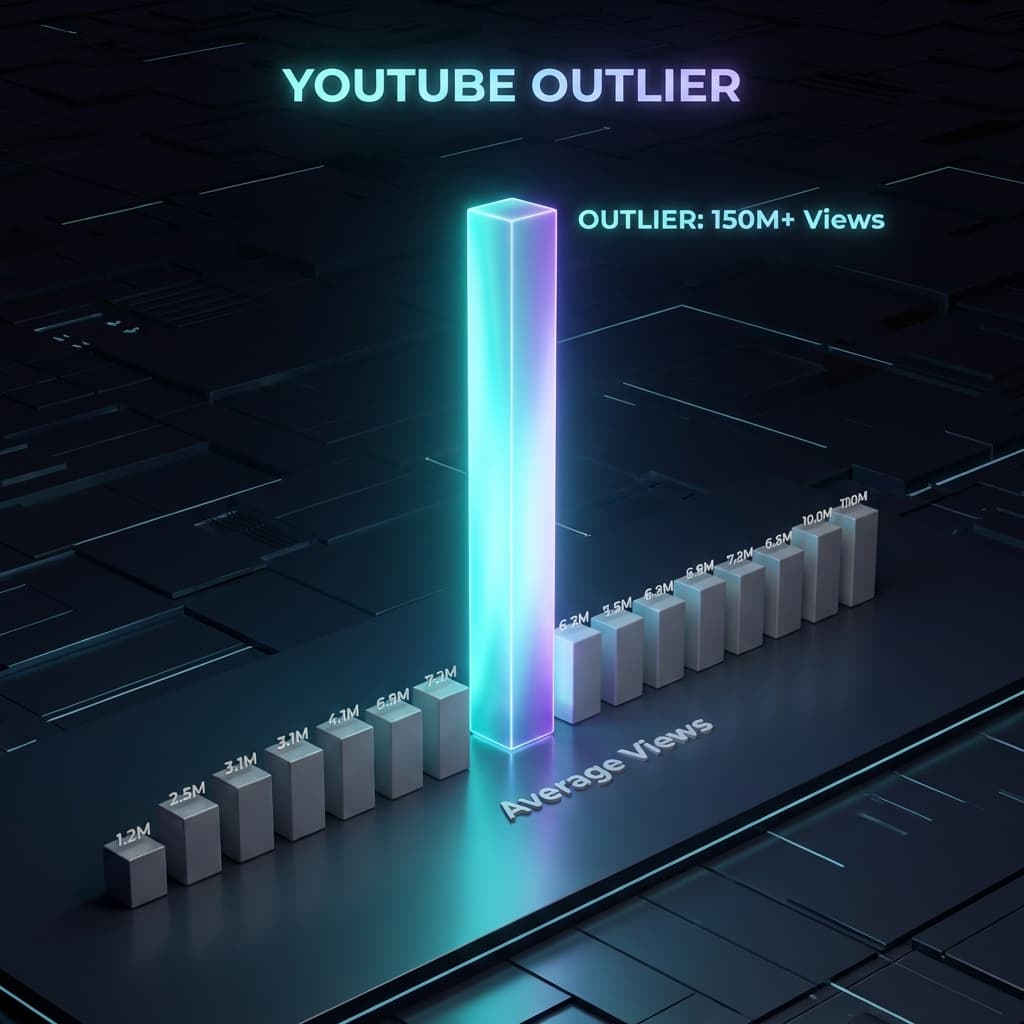
This is exactly why outlier detection is so powerful. When you create content on a topic that already proved it can break through on similar-sized channels, you dramatically increase your odds of passing the algorithm's test.
Why Outlier Detection Aligns Perfectly with the Algorithm
- High CTR - Outlier topics already proved they generate clicks
- Strong retention - Outlier formats already proved they keep viewers watching
- Viewer satisfaction - Outlier videos already proved they deliver value
- Recency - You are creating fresh content on proven topics
When you study outliers, you are essentially reverse-engineering the algorithm's preferences. You are finding the exact combination of topic, format, title, and thumbnail that the algorithm already wants to promote.
This is not gaming the system. This is giving the algorithm exactly what it is designed to reward.
Specific Tactics for Algorithm Alignment
Tactic 1: The 15-Second Hook
The retention curve is steepest in the first 15 seconds. Lose viewers here and YouTube will not push your video further.
- State the promise or result (what will the viewer gain?)
- Create urgency or curiosity (why should they keep watching?)
- Establish credibility briefly (why should they trust you?)
Example: "This simple change to your thumbnails increased my CTR from 3% to 9% in two weeks. I will show you exactly what I did, step by step." (5 seconds, promise + proof + curiosity)
Tactic 2: Retention Patterns
- Where do viewers drop off?
- Where do they rewatch?
- What sections have the flattest retention?
The sections with flat retention (few people leaving) are your winning content types. Create more content that matches those patterns.
Tactic 3: Session Watch Time
YouTube values videos that lead to more YouTube watching, not just single-video watch time. This is called session watch time.
- End screens that point to your most engaging video
- Playlists that encourage binge-watching
- Series-style content where each video leads to the next
- Avoid content that makes viewers leave YouTube (e.g., "go check out this website")
Tactic 4: Audience Matching
- Staying consistent with your niche
- Using clear, specific titles and descriptions
- Creating content that serves one specific audience
- Not pivoting topics dramatically between videos
Algorithm Changes in 2026: What Is New
Increased Small Creator Visibility
YouTube has been testing "new creator spotlights" - recommendations specifically from channels viewers have not seen before. This is a significant opportunity for small channels with strong content.
Better Content Understanding
YouTube's AI now better understands video content through computer vision and audio analysis. This means your actual content quality matters more than ever - good metadata cannot save a poor video.
Shorts and Long-Form Crossover
The Shorts and long-form algorithms are now more connected. Viewers who discover you through Shorts are more likely to see your long-form content recommended, and vice versa.
Satisfaction Surveys
YouTube has expanded its viewer satisfaction surveys. Videos that viewers report enjoying get longer recommendation lifespans, even if raw metrics like CTR start declining.
The Algorithm-Aligned Content Strategy
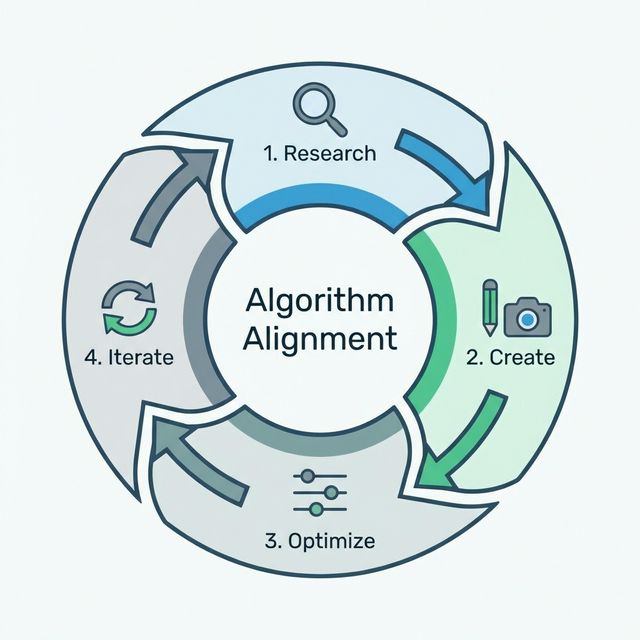
Here is a practical framework for creating content the algorithm wants to promote:
Step 1: Research (Before You Create)
- Find outlier videos in your niche (5x+ performers)
- Identify keywords with search demand
- Study the titles, thumbnails, and formats of top performers
- Choose topics with proven appeal
Step 2: Create (With Signals in Mind)
- Design a compelling thumbnail that stands out (CTR)
- Write a curiosity-driven title (CTR)
- Hook viewers in the first 15 seconds (Retention)
- Use pattern interrupts throughout (Retention)
- Deliver genuine value (Satisfaction)
- End with a strong call to action to watch more (Session time)
Step 3: Optimize (After Publishing)
- Monitor the first 48 hours of performance
- Check CTR and AVD in YouTube Studio
- If CTR is low, consider updating the thumbnail
- If retention drops early, analyze where viewers leave
- A/B test thumbnails using YouTube's built-in tool
Step 4: Iterate (Continuous Improvement)
- Track which topics consistently perform
- Double down on winning formats
- Cut underperformers quickly
- Maintain the 70/30 proven/experimental split
More Resources
Ready to align your content with the algorithm? These guides will help:
- Find proven topics: Learn how to use YouTube outlier videos to find what the algorithm already wants to promote.
- Fix low views: If the algorithm is not pushing your videos, our guide on videos under 100 views diagnoses the problem.
- Boost your CTR: Design thumbnails the algorithm loves with our thumbnail design guide.
Stop fighting the algorithm and start aligning with it. Start free with OutSpotYT - find the exact topics, formats, and patterns the algorithm already rewards. No credit card required.